Pillar — Residency
Residency by investment across eight markets
Four of the eight markets we cover offer a defined investment route to residency. Four do not, and no amount of property buying creates one. Here is what each actually requires, including the Panama threshold that changes in October 2026.
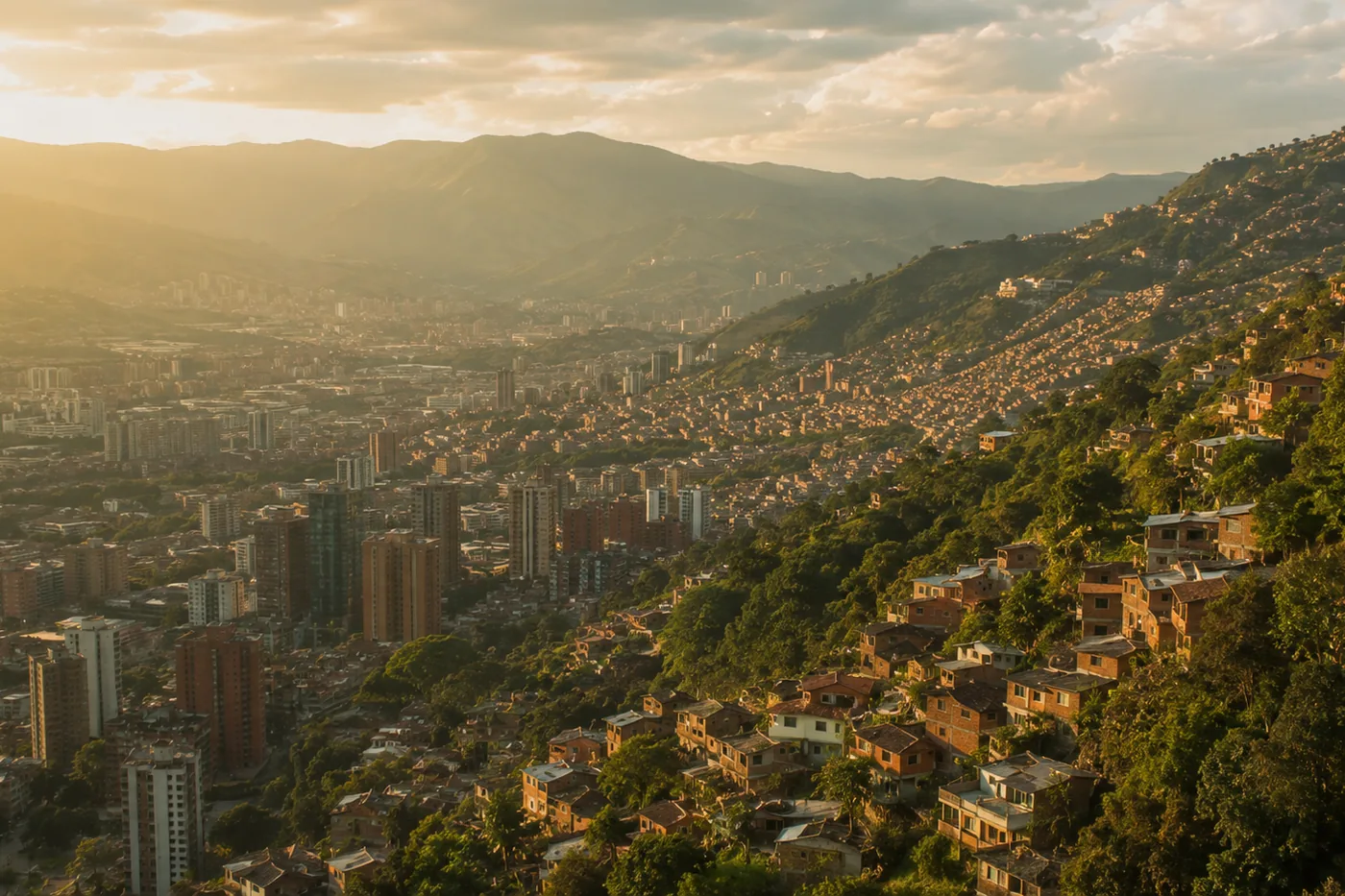
Illustration — AI-generated artwork, not documentary photography.
On the groundThe property and business investor visas are frequently confused online, and the evidence you file has to match the category exactly. File a property purchase under the business track (or vice versa) and expect delays, not an easy fix.
Investment routes to residency
The threshold, the strings attached, and whether you have to actually be there.
| Market | Investment route | Threshold | Stay requirement |
|---|
| Colombia | Investor visa — property or business | 350× the minimum monthly salary for property; 100× for business. Roughly USD 155,000–165,000 on the property limb. Both figures reset annually with the minimum wage. | Yes in practice |
| Panama | Qualified Investor Visa — property, securities or deposit | USD 300,000 in unencumbered property equity, reverting to USD 500,000 after 15 October 2026; USD 500,000 in exchange-listed securities; USD 750,000 fixed-term deposit. Five-year hold. | None |
| Indonesia | Second Home Visa | Proof of an Indonesian property holding or a deposit of IDR 2 billion at a designated state bank. Also satisfies the stay-permit condition for Hak Pakai title. | Long-stay route |
| Brazil | Investor route | Exists, but is materially less packaged and less marketed than Panama’s or Colombia’s. Confirm current thresholds directly. | Varies |
| Mexico | No golden visa | Residency runs through economic solvency and family routes rather than an investment threshold. Property purchase confers no immigration status. | — |
| Argentina | Not confirmed | A citizenship or residency-by-investment pathway has been promoted by several advisory firms. We could not confirm its statutory basis and scope, so we publish no thresholds for it. | — |
| India | None | No residency-by-investment or golden-visa programme exists. OCI status derives from Indian origin or marriage, not from a purchase. | — |
| Vietnam | None | A property purchase confers a housing ownership certificate, not an immigration status. Foreign individuals married to Vietnamese citizens are the significant exception. | — |
Verified 11 August 2026 against the sources cited in each market brief. Rules in this table change by decree and by court injunction, sometimes without announcement. Treat it as a map of where to look, not as legal advice, and confirm anything you intend to act on with a licensed practitioner in that country.
How to read the thresholds
A headline number is the least useful part of a residency programme. Three things behind it decide whether it works for you.
Is the capital locked, and for how long? Panama’s Qualified Investor Visa requires the investment to be held for five years and, on the property limb, the equity cannot be mortgaged. That is genuinely illiquid capital, not an asset you happen to own. Price the opportunity cost of five years, because it is the real cost of the visa.
Does the threshold move? Colombia’s is indexed to the minimum monthly salary, so both limbs rise every year when the wage is set. Panama’s property threshold is scheduled to rise from USD 300,000 to USD 500,000 after 15 October 2026. A number you read in an article eighteen months old is not a number.
Do you have to be there? Panama grants permanent residency from day one with no minimum physical presence — which is the entire product for someone structuring rather than relocating. Colombia’s route expects you to actually live there. These are different things being sold at superficially similar prices.
One further caution, which applies to Panama specifically and to this category generally: published figures for Panama’s property threshold disagree across advisory sites, with several still quoting USD 200,000. Where sources conflict we say so rather than picking the most attractive one. Confirm the statutory figure with a licensed attorney in the country before transferring anything.
Colombia in depth
Colombia’s investor visa is the route most readers of this site are actually weighing, and its distinguishing feature is that it is a residency programme for people who intend to show up.
Two limbs. The property route requires an investment of 350× the salario mínimo mensual legal vigente; the business route requires 100×. Because both are expressed as multiples of the minimum wage rather than as fixed sums, they reindex every January when the wage is set — so the dollar figure drifts with both the wage increase and the peso.
The property route also does something Panama’s does not: it puts you in an asset you can actually use, in a country with a cost base that works in your favour, without a five-year lock on the equity. The trade-off is that Colombia expects presence, and presence past 183 days brings you into the Colombian tax net on worldwide income.
Our field report on the residency-by-investment visa covers the documentation sequence, and the residency question is inseparable from the banking one — a cédula follows the visa, and meaningful banking follows the cédula.
Residency is not the same as tax residency
This is the distinction that costs people the most money and it is barely mentioned in the marketing for any of these programmes.
An immigration status tells you where you are permitted to live. A tax residency tells you which government taxes your worldwide income. They are set by different rules, they are triggered by different facts, and having one does not give you the other.
Colombia brings you into worldwide taxation past 183 days of presence. Panama taxes only Panama-sourced income regardless of your residency status, which is the actual product being sold there — but Panama not taxing your foreign income says nothing about whether your home country does. US citizens in particular are taxed on worldwide income regardless of where they live or what visa they hold, and no residency programme on this list changes that.
The sequence that works: establish what your current tax residency costs you, establish what the new one would cost, establish whether a double taxation agreement exists between the two, and only then look at visa thresholds. People who do it in the opposite order buy a residency that solves a problem they did not have.
What we could not verify
- Panama’s current statutory property threshold. Published figures conflict and the number is scheduled to change on 15 October 2026. This is the single most consequential figure in this pillar and the one we would least want you to take from a web page.
- Brazil’s current investor visa thresholds and conditions, which we have not verified to the standard we apply elsewhere.
- Argentina’s reported investment-to-citizenship pathway, which is being actively marketed and which we could not confirm.
- Processing times. Published statutory windows and actual experience diverge in every market here, in both directions.
- How each programme treats dependants, which varies more than the headline thresholds do and materially changes the total cost for a family.
Field reports in this pillar
Read the market briefs
Every market in the table above has its own brief, built on the same eight blocks so the sections line up when you open two side by side.
All market briefs →